Draw a circle shape with a curve coming out of the top. Close the curve with a straight line. This second shape should look like a modified triangle
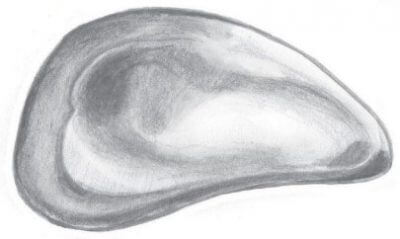

Draw a circle shape with a curve coming out of the top. Close the curve with a straight line. This second shape should look like a modified triangle

Start with a small oval shape placed slightly off-center toward the top of a larger oval shape as shown.

Start with two oval shapes that will be the front and back of the box. Connect with parallel lines as shown that cut through each oval.

Start with a circle. Add an arch to the top to form the leaner part of the egg.

The most popular first move in the game of checkers is called “Old Faithful,” when a player moves one of the two center pieces toward the opponent. Make your first moves in this tutorial using ellipses and lines.

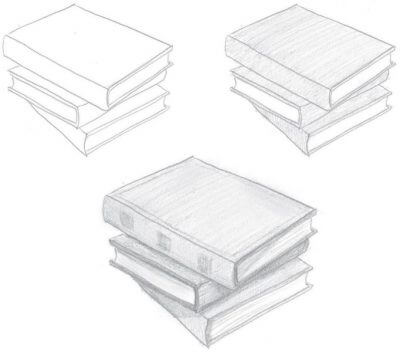
Start with two slightly diagonally placed parallel lines as shown on top (fig. 1). Add two slightly diagonally placed parallel lines going in the opposite direction to connect them (fig. 2).

Start with two ellipses far apart from one another (about the length of a AAA battery)! The one on the right is slightly smaller than the one on the left to show distance / perspective. Connect the ends of each ellipse with straight lines.
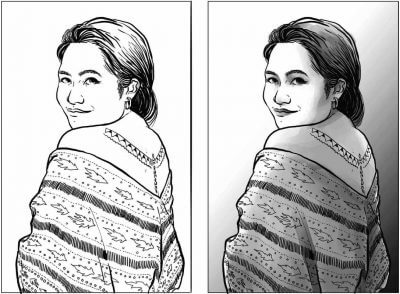
There’s more to shading than just adding black! Shadows can be angular or round, hard or soft, and they help set a mood. They can jump from light to dark or gradually darken with many midtones.
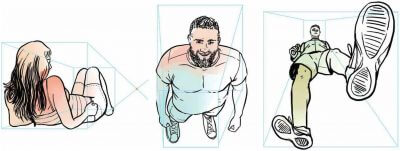
So far, we’ve drawn figures standing at the same level as us. But what happens when we look down from a higher position? What happens when we look up at a figure from below? These examples highlight point of view.
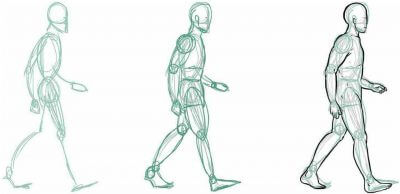
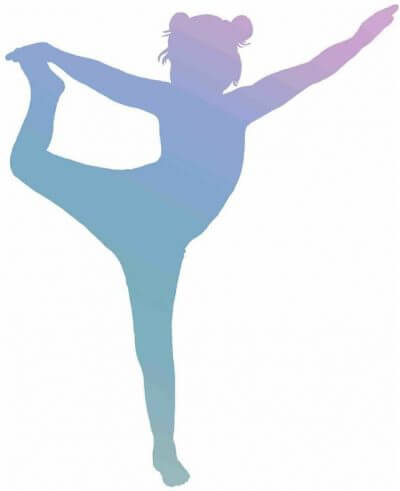
A still, standing figure has its feet directly under the head, hands at its sides, and shoulders and hips parallel. As the body shifts from one foot to the other, knees and elbows bend, and the spine becomes an arch.
Begin with a very light shade of pencil. Draw trapezoids for the torso, a circle for the head, and lines for the legs and arms. Thicken the lines for the upper arms and legs, then use slightly thinner shapes for the lower limbs.
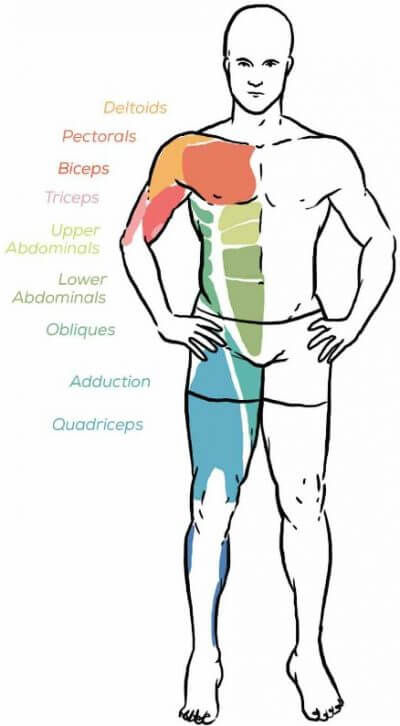
The blue area above is the basic shape, and the red areas are some important muscles. The size of the red areas can be different. Some bodies carry a lot of muscle in their chest, shoulders, and biceps, and their backs and chests are broad.
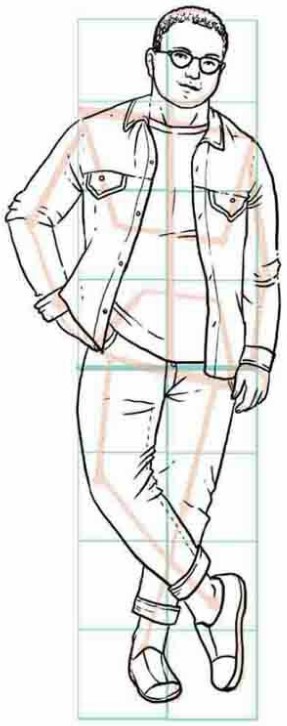
Using a grid can help us draw a figure. We can use “heads” as a measurement for height. The average height of an adult is 8 heads. Generally,the elbows and belly button are 3 heads down, and the hands and midthigh area are 5 heads down.
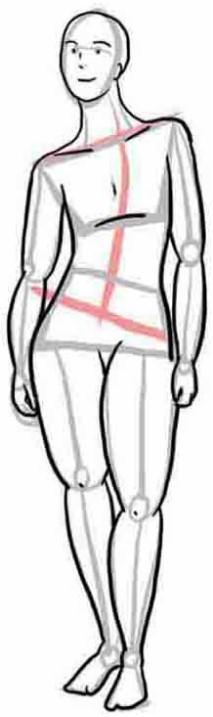
The human body has more than 200 bones and 650 muscles, but we’ll focus on those most important for showing form and movement. We’ll start with a stick figure and give it straight arms and legs. Let’s make the torso an upside down trapezoid and the hips a right side up trapezoid.