I’ve chosen this subject for several reasons.It has all the elements I love in a view: An elevated perspective, a vast panorama, a wide expanse of water reflecting the colours of the ever changing sky. I couldn’t ask for more. I will doubtless paint this scene again and again. It is so important to have passion and conviction about the subjects you paint … and this scene never fails to excite me.
Materials
• Art Spectrum Colourfix paper.
• A variety of Pastels – mainly Art Spectrum, Winsor & Newton, Rembrandt, Schminke and Unison.
STEP ONE
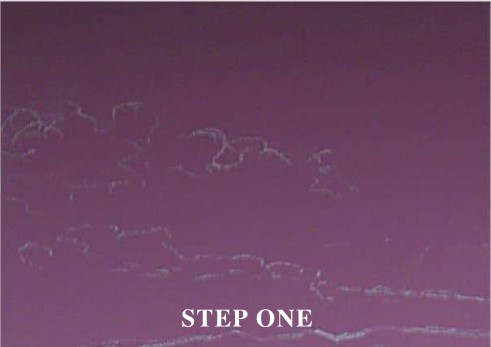
With a pastel pencil I very loosely sketch in the basic layout and shapes to establish the basic composition. I decide where the horizon line will be as I usually place it higher or lower than halfway – depending on whether I want to emphasis the sky or the foreground. The curving shape of the meandering river is a key element to this composition, so it’s important to get it right.
STEP TWO
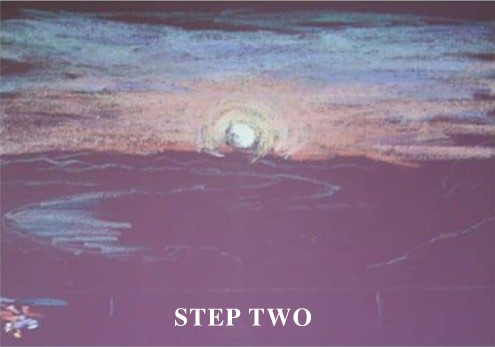
I roughly block in the basic areas in the sky and I place the lightest area of the sun to ensure the surface does not get filled with darker colours (making it more difficult to create the ‘light glow’effect).
STEP THREE
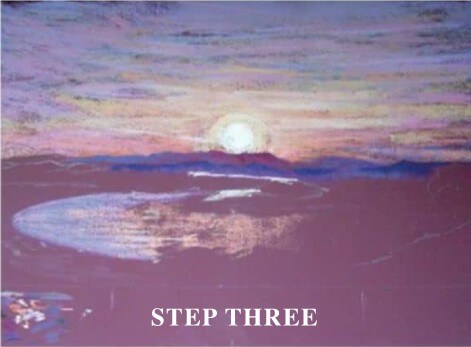
I begin to work up the distant mountains, choosing cool blues and mauves. Against the luminous sky they form a distinct shape. It’s a challenge to balance lack of detail and lost edges normally associated with distance with this silhouette effect. I also start marking in the curve of the river in similar colours to the sky.
STEP FOUR
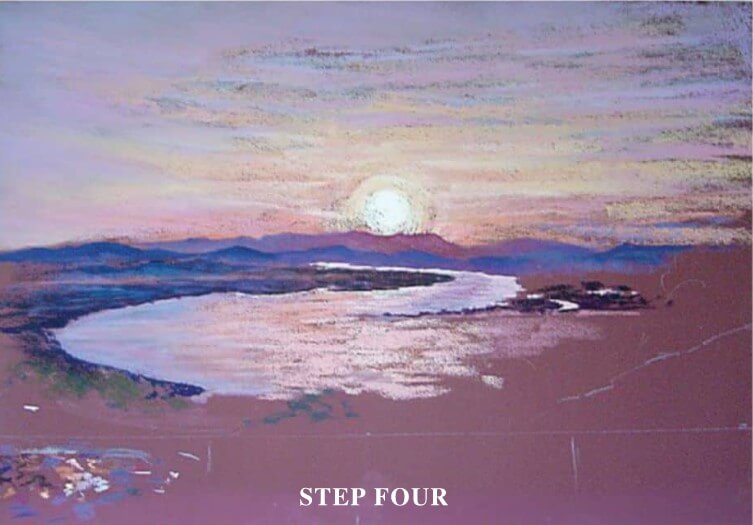
I continue to build on the distant hills, and the water surface, using some of the same colours to build up the sky. I try to avoid too much detail, and I’m not too concerned how the pastel is applied … as long as it gets there.
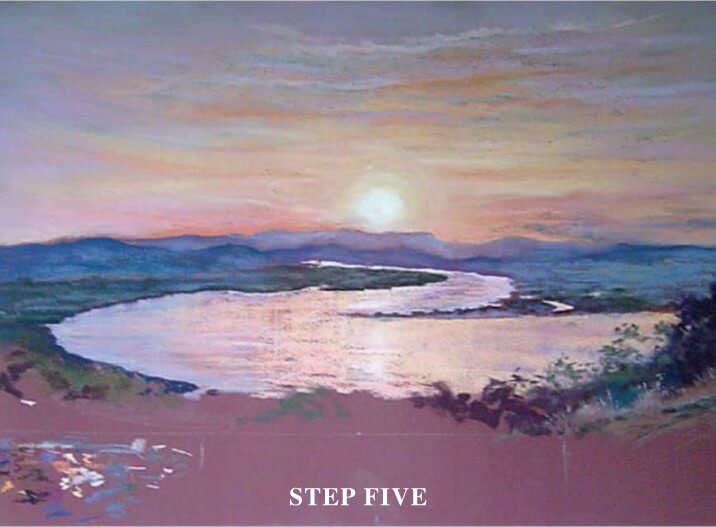
STEP FIVE
I move forward and work up the right side. Now, apart from the immediate foreground, most elements are roughed in. I begin to tone down the hills to create a sense of distance and intensify the warm colours in the sky. I blend some of the rough marks in areas where I think a smoother appearance will lend itself to the work. I avoid blending all areas as I like to keep a contrast throughout the work; rough and smooth, light and dark, warm and cool. Contrast is vital!
STEP SIX
I begin to pick out some cloud details in the sky. I work up the foreground vegetation using more detail and textures, and darker tones and colours.

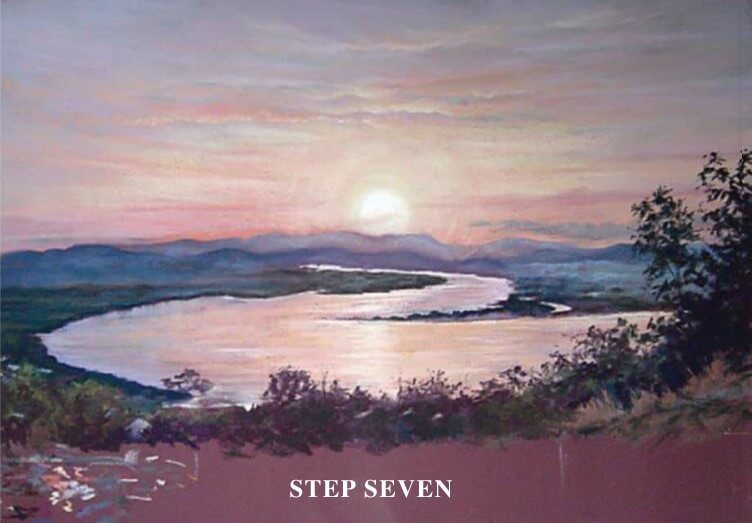
STEP SEVEN
I start to indicate a few rooftops and signs of life of the town down below.
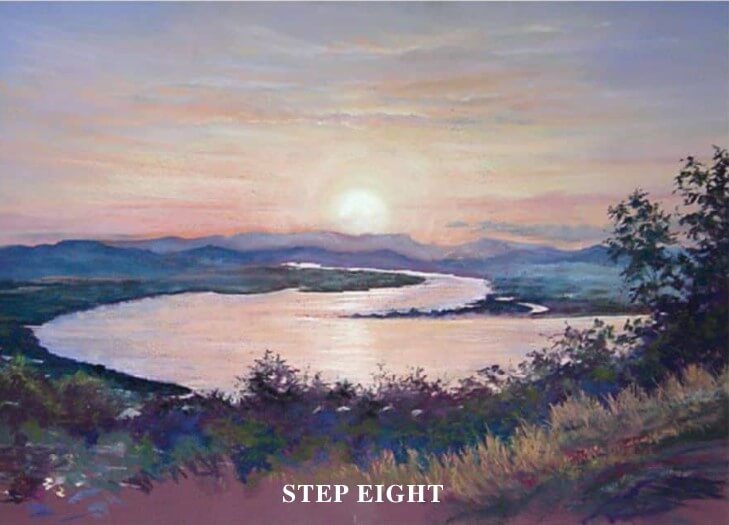
STEP EIGHT
I decide to extend the painting further than originally planned on the bottom edge. I like the way the vegetation ‘frames’ the water element and the weight of this dark area holds the painting in better balance.
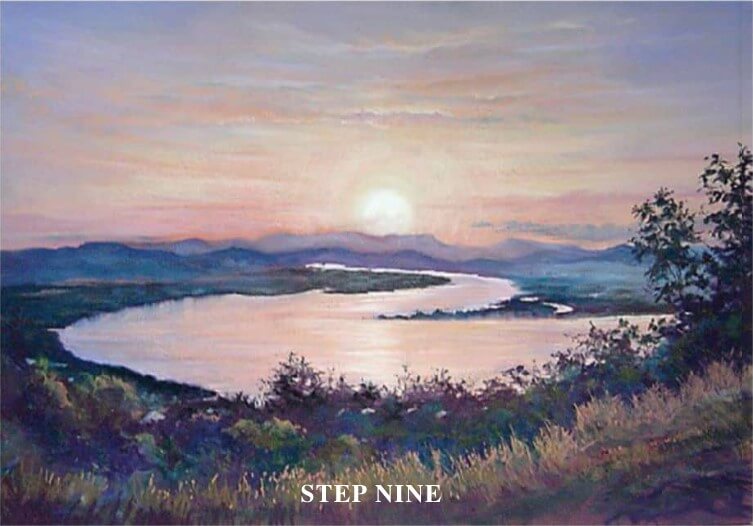
STEP NINE
I place some detail and highlights in the foreground grasses. Now is the ideal time to put the work aside for a few days.
FINAL STEP
I decide to place some cloud to the left of the sun glow, to balance with the heavy vegation on the right, as there is too much fussiness in the sky. I remove the dark grey cloud low on the horizon to the right of the sun. I play down some of the distracting detail in the cloud above the sun. I lightly apply some rich soft oranges to the water surface and sky – to create warmth and soften the sun’s edges to give a hazy glow. Generally, I work up a few highlights and details … trying not to fiddle too much!

MASTER HINTS AND TIPS
• When a pastel painting is complete, use glasseine paper and – with a credit card – swipe the whole surface, pressing firmly. This helps to hold the pastel and prevent any fallout of odd specks of colour.
• Be passionate about what you are painting. Paint what sparks your senses and fires you up … the sooner the better, while the fire’s still hot! The energy and feeling you have for that particular place, view or scene will show through.
• The scenes I paint are of places where I spend a lot of time; and places I feel emotionally connected to. Sometimes it can take a couple of years of visiting somewhere before I have absorbed enough to feel ready to paint what I see and feel. Looking and absorbing is a continuous process.