Texture is an element of art that can help to make a drawing look more realistic. To create the illusion of realistic fur, directional lines with dark values (shades) and light values (tints) work well.
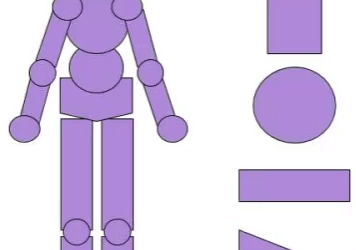
Step 1: Start with a small oval next to a larger circle. Connect with curves as shown.

Step 2: Add a long oval overlapping the circle and the curves for the front leg. Draw another half oval behind the first for the far front leg. Do the same for the back legs.

Step 3: Add paw shape at ends of leg ovals. Use diagonal lines for snout, curved mouth, and rounded ears. Add sideways triangle for eye.

Step 4: Draw hatch marks (short, quick lines) around perimeter of bear shapes to show texture (see inset.) Shade the nose and eye. Add brow and nose bridge detail. Re-shape closest front paw. Add a small tuft for a tail. Erase back leg oval that intersects with circle belly.

Step 5: Add another layer of fur texture all over. Keep hatch marks closer in areas of darkness, especially under the belly area. Draw hatch marks further apart in areas of highlight. Notice the direction of the hatch marks inside the bear as they follow the cross contour of it’s body.

Step 6: Blend tones. Add more hatch marks in areas of darkness. Use kneaded eraser to press gently on areas of highlight.

Extra time: Add more detail around the face including tight hatch marks, highlight on nose and eye, and claws. Add even more contrast by darkening shadows and lightening highlights. Highlights can be lifted out using an eraser, increasing the range of value and contrast in the drawing.