STEP ONE
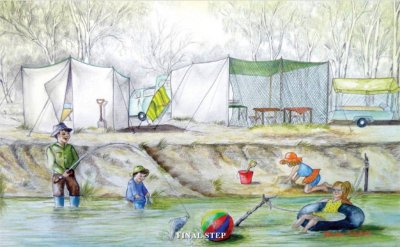
I’ve chosen to paint a sunny fun day in the water! On a quarter sheet of 640g H/P watercolour paper I have airbrushed a background using Cadmium yellow and Cobalt in separate washes.

STEP ONE
I’ve chosen to paint a sunny fun day in the water! On a quarter sheet of 640g H/P watercolour paper I have airbrushed a background using Cadmium yellow and Cobalt in separate washes.
STEP ONE
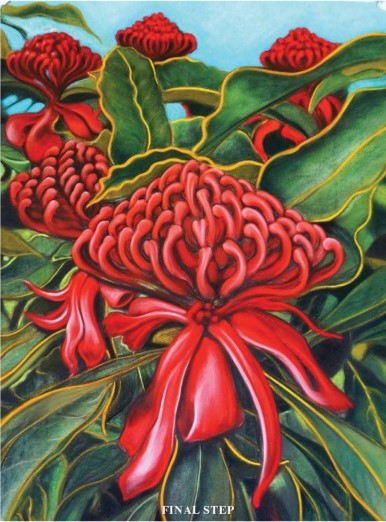
To begin a work, I always use a soft thin charcoal stick. Quite a few. This is good for shading and structuring the composition. I also use my hands and fingers to help shape the forms of the work.
STEP ONE
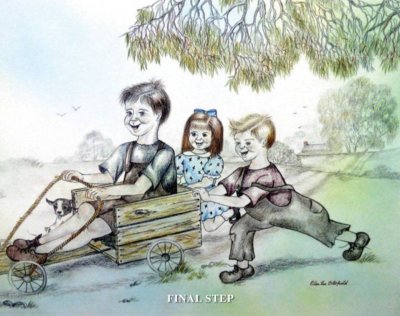
On my 640g HP watercolour paper I have lightly airbrushed some Yellow light, Cobalt blue and Viridian. Once this had dried completely I sketched up my design.
STEP ONE
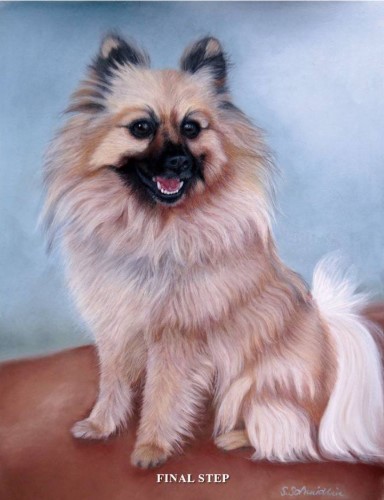
Once I have an animal in mind which I am interested in painting, I ask the owners if I can take some photos. In this case it is a neighbour’s dog, a Pomeranian called Max.
STEP ONE
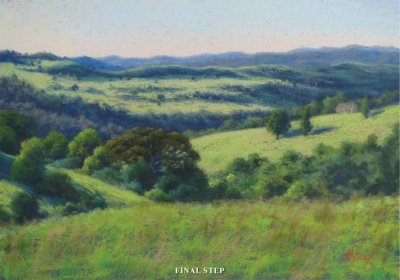
Using the recent plein air pastel painting as my reference and with a stick of Vine Charcoal, I drew in the major shapes of my landscape composition on to a half sheet of Art Spectrum Storm Blue Colourfix sanded paper.

STEP ONE
After tracing the drawing onto the scratchboard using Loew Cornell transfer paper, I have scratched the major lines and area around the eyes and ears using a scalpel

STEP ONE
Using the photo as reference material, I crop it to what I regard as an interesting part, then alter the line of the wave to help create distance and lead the eye further into the composition.

STEP ONE
I always start with a 2B pencil, making sure to draw lightly this provides me a margin of error which allows me to revise as the drawing develops.

STEP ONE
Scale up your drawing or image onto the tracing paper using a grid method you are comfortable with.Position the tracing over the pastel paper.
STEP ONE
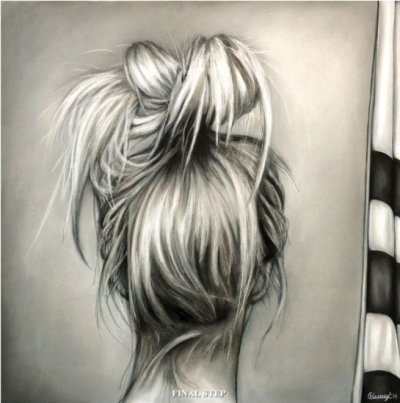
Sketch – roughly sketch the general outline and proportions of the piece using the black pastel