Using a view finder in the same ratio as the support chosen (2:3), I studied the scene to determine the parameters (limits) of the scene, and the compositional elements.


Using a view finder in the same ratio as the support chosen (2:3), I studied the scene to determine the parameters (limits) of the scene, and the compositional elements.

I use a projector to get the basic drawing on the paper. I know this is a frequently frowned upon method but it is important to get the shape accurate.

Generally, I begin a work by making a sketch on paper using a fine felttip pen. The sketch looks a bit like ‘colour by numbers’ and in fact acts as such for me during the stages of the painting.

Using a #6 Filbert brush and very wet “slurry” of light red, ultra blue and yellow ochre, I draw in the design on the board.

I usually start a new painting by looking through my stored digital photographs, on the computer, that I have taken over the years.

Before I draw I like to meet the animal, to see it move, see it interact with others, listen to it, even smell it! When you sketch from life it helps you to work out the anatomy and form of the creature.

I tint the selected canvas with an acrylic mix of Maroon and Black. This dark base will allow me to give greater effect with the light.

I chose a 16 x 12 inch stretched canvas, from ‘Highly Strung’ Picture Framers of Eumundi in Queensland, which I primed with a liberal coating of Red Ochre Gesso.

I begin with a pre-stretched and primed canvas. On my mixing plate I start with Payne’s Grey, Cobalt Teal and Titanium White and a small amount of MM1 Drying Retarder in the middle.

I coat my craft board with two coats of Gesso Primer (rolled by preference). The board needs to be well sealed, to give an even finish on the painting.
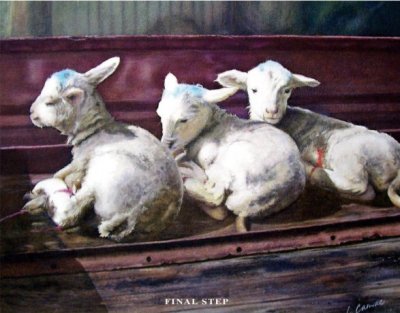
Having stretched your watercolour paper and allowed it to become bone dry, commence drawing the image onto cartridge paper
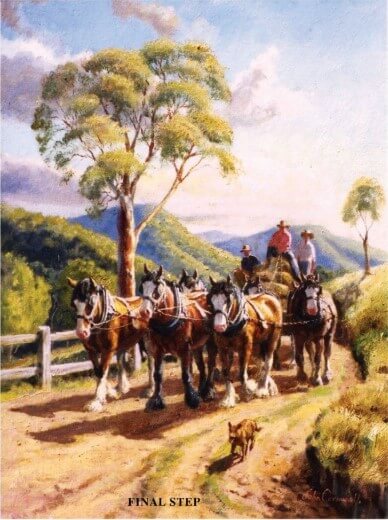
I like to mount my own canvas. I cut a piece of board to a selected size and then cut prepared canvas about a centimetre larger than the board all around.
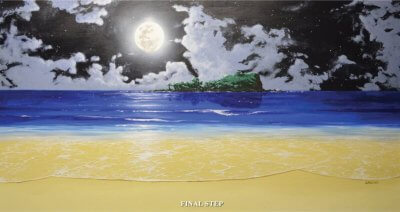
For this art piece I began with a drawing, refined it, and then placed it into my Artograph projector. I then used the projector for quickly and easily getting my small drawing enlarged onto my 1200 x 600 canvas.
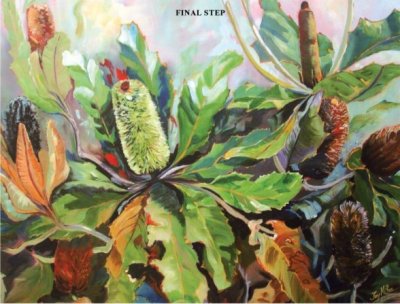
STEP ONE
Using a charcoal stick, I drew a couple of rough “thumbnails’ to familiarise myself with my subject (and to try for an interesting composition).

I search for an interesting subject in my garden. The little Superb Blue Wrens are very busy – so I include the male blue wren in my composition and (for interest) add my teacup.