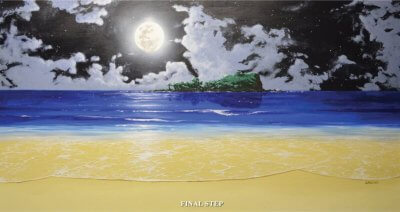
For this art piece I began with a drawing, refined it, and then placed it into my Artograph projector. I then used the projector for quickly and easily getting my small drawing enlarged onto my 1200 x 600 canvas.

Learn how to paint acyrlics from master.Follow artist’s steps and tips.You will be able to know their materials which used in their art.
For this art piece I began with a drawing, refined it, and then placed it into my Artograph projector. I then used the projector for quickly and easily getting my small drawing enlarged onto my 1200 x 600 canvas.
STEP ONE
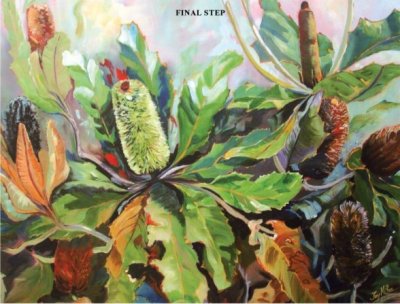
Using a charcoal stick, I drew a couple of rough “thumbnails’ to familiarise myself with my subject (and to try for an interesting composition).
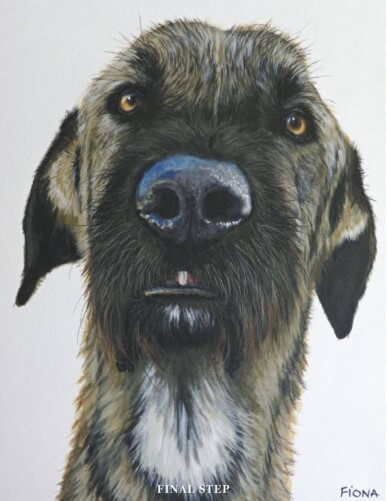
Prepare the canvas by applying two coats of primer. Make sure the first coat is thoroughly dry before applying the final coat. Transfer your image to the canvas using graphite paper, making sure the dog is placed within the canvas area.

STEP ONE
Prime the canvas support with vigorous strokes of gesso, leaving textural lines. Cross-hatch brush marks. Allow this to dry thoroughly.
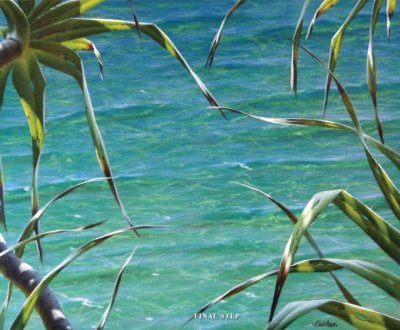
I’ve dragged out an old canvas with a couple of paintings already underneath. I like the fact that it has a little bit of build and texture in it already. I lay a nice thick coat of Napthol Red Light over the top of it, and let that dry. I then roughly chalk in the outline of the pandanus leaves.
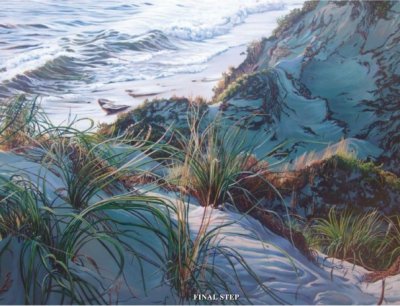
STEP ONE
Take the deep edge canvas and gesso it three times. If it is commercially primed, check the weave to see if it needs another coat.
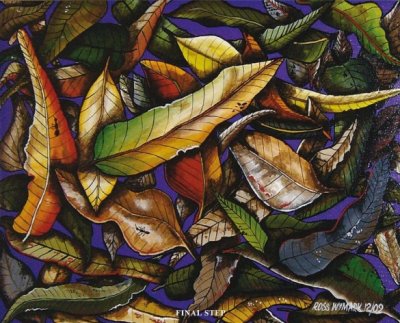
I applied one coat of purple paint with the roller, then allowed it to dry before applying a second coat.
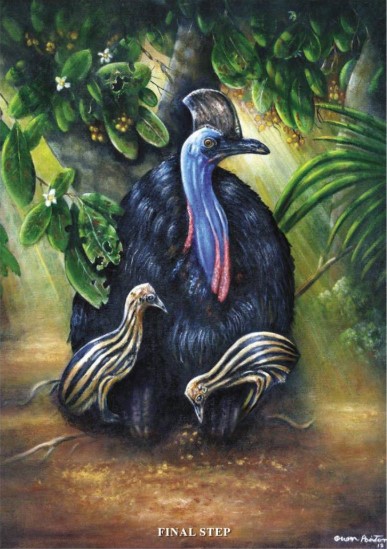
I start by preparing the canvas with two coats of acrylic backing paint. For this painting I have used straw colour, as it will help to bring out the light filtering through the rainforest foliage.

Once I have decided on the format of my painting, I mist a fine spray of water across the horizon line to dampen the canvas and diffuse the paint to give an initial sense of perspective.

I always start by painting the background, and when this is thoroughly dry I draw in my subject using a watercolour pencil. Any corrections that need to be made to the drawing can be easily wiped off with water.