What came first: The title or the painting? For me, it can be either. There is nothing worse than staring at a blank canvas. Normally I will rough out a couple of layouts (on A4 or A3 layout paper) of the subject I am going to paint.
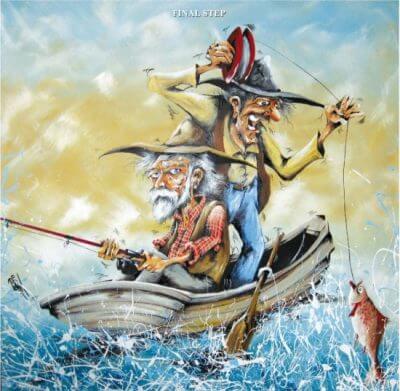

What came first: The title or the painting? For me, it can be either. There is nothing worse than staring at a blank canvas. Normally I will rough out a couple of layouts (on A4 or A3 layout paper) of the subject I am going to paint.
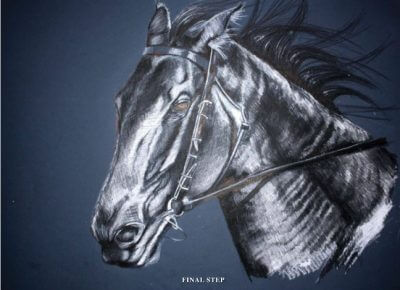
I saw all these amazing coloured pastel papers in one of the art shops I frequent, and the blue colours really caught my eye. I bought a bunch of different hues of blue and couldn’t wait to get started.

The initial block in. Just the most basic lines. This is only to position them on the canvas. No details. Drawing will be adjusted and corrected as I move through the painting.

I prepared a canvas with six coats of Gesso, making sure each coat was dry before applying the next coat. I then sanded the final coat so it was smooth, leaving no ridges from the weave.

STEP ONE
Outline where you want the drop to appear.

This painting is quite simple in concept and composition. However, consequently there is nowhere to hide! Simplicity can often add impact.

Having chosen an interesting specimen” I draw my tree. I am working on a 30cm x 50cm sheet of 600g Hot Pressed watercolour paper. I already have an idea of colours and design.

I taped the watercolour paper to a backing board to make it easier to move about. I tend to alternate between using the table top, balancing the work on my knee, and working on it at my easel.

Working directly from life means I can start with minimal preparation. This also teaches us to work quickly and adapt to changing situations (particularly when plein air painting).

After drawing the guide lines onto the canvas, the sky, sea and underwater rocks are blocked in.