STEP ONE
Having decided on the setting I want the next step is to decide on the medium I’m going to use and this time it’s watercolour and pencil!

STEP ONE
First draw a grid over the photo reference. Usually I do this at 2cm squares, but it really depends on the size of the piece. (I use Photoshop and place a readymade grid onto my reference.)
STEP ONE
On Black Stonehenge paper, I lightly drew in some basic lines, scumbling in a few colours here and there to establish the composition and placement of the larger masses of my subject.
STEP ONE
If you are not confident drawing freehand you may wish to use a grid pencilled in on an A4 photocopy of your picture. Using a grid will not put indentations in your paper like tracing will.
TEP ONE
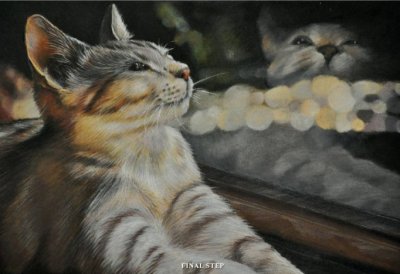
For this drawing, I am using a Clairefontaine pastel mat in Dark Grey. It has a slight sanded texture to it, but it doesn’t chew your pencils up like some pastel mats can. Place your drawing on the pastel mat paper using a light colour. When using Black I use a light hand and a pastel pencil, as I can easily rub my lines out as I go.
STEP ONE
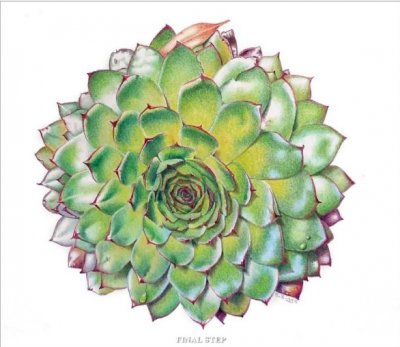
Lightly pencil in the shape of the plant, carefully noting how the petals overlap. I use the lightest coloured pencil (Pale Mint) at this stage, as you are unable to erase graphite pencil later.
STEP ONE
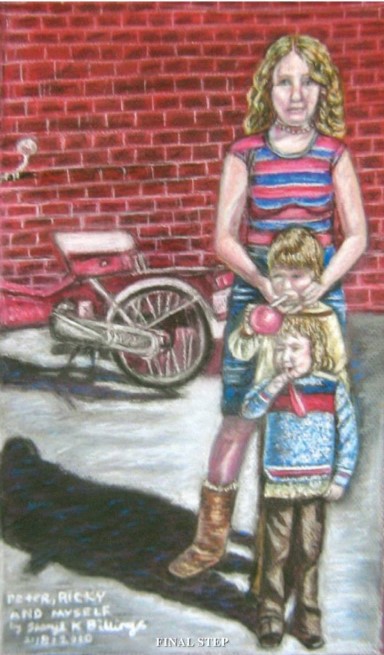
Start drafting your shapes on Canson Pastel paper with a white Derwent Pastel pencil. I found using this old photo (of when I was only 16) a real skill to practice. The most important thing is to sketch your outline of the picture first so then you will know that the composition will always balance.
STEP ONE
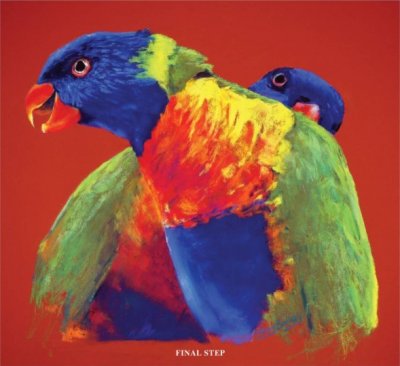
My palette. I select some colours before I start, and add to them as required.
STEP ONE
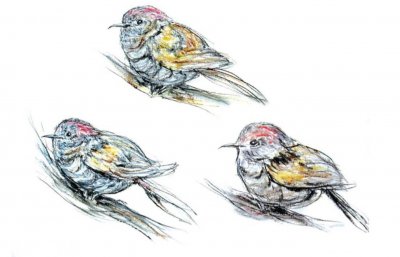
When attempting to play loosely with drawing media, I allow for as little distraction as possible. I find it vital to have all the necessary materials and nothing else (especially unsuitably coloured pastels) close at hand.

STEP ONE
Pencil up the drawing on paper, making sure that all line work is accurate in terms of perspective and other details such as shape and proportion. It helps to lightly rule straight lines, to give the true location of long edges (such as rafters).