I roughly painted my canvas by using up remaining paints from a previous painting in earthy tones. I rubbed out some areas and added more paint into sections and left any marks that will represent the dry earth and twigs etc.
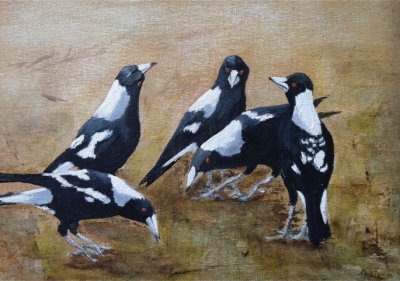

I roughly painted my canvas by using up remaining paints from a previous painting in earthy tones. I rubbed out some areas and added more paint into sections and left any marks that will represent the dry earth and twigs etc.
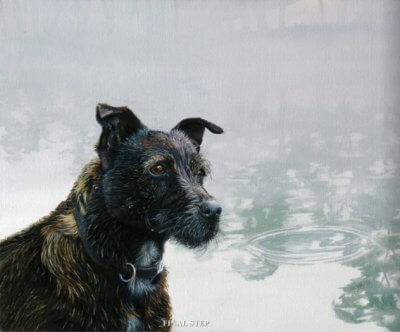
After transferring my sketch of Sandy onto the canvas, I began blocking in the background. As the background will be shrouded in mist, I wasn’t concerned about putting in any great detail.

I started with a rough sketch of the composition. My initial sketch is usually quite rough, but expressive. I use it to work out the lines of action and flow of the eye.
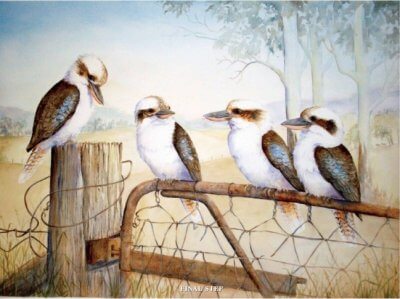
I usually enlarge my original drawing on my photocopier to the correct size, ready to be transferred onto the 78 x 54 cm stretched piece of 300gsm Arches watercolour paper.

After deciding on size and format, I drew the foreground objects to size with as much detail as possible before transferring them onto my prepared board.
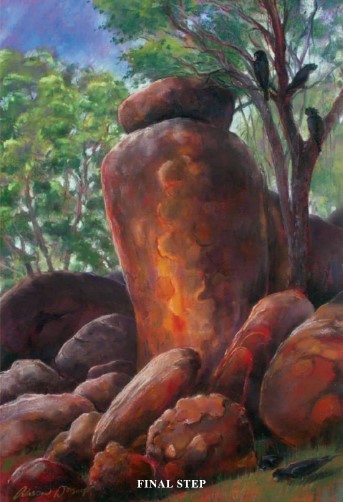
I keep my ‘outdoor’ set in a cheap plastic fisherman’s box – the kind with compartments used to keep hooks and lures. I pack the pastels in with cotton wool or rice, so the rougher the journey, the cleaner they get.
STEP ONE
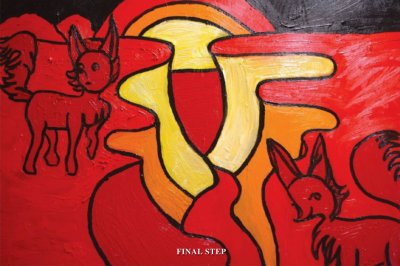
Before I even contemplate creating a composition I always make sure there are several layers of paint on my canvas. Just starting on a new, white canvas can be overwhelming.
STEP ONE
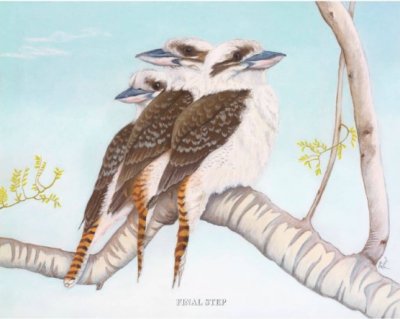
Firstly I applied a very pale blue soft pastel (gently rubbed in with my finger) to the background immediately around the birds and the very small foliage.

STEP ONE
Setting up the composition
I draw a border around the page, so that I don’t stray too close to the edge, remembering the picture will be framed. I then set my guide marks,
STEP ONE
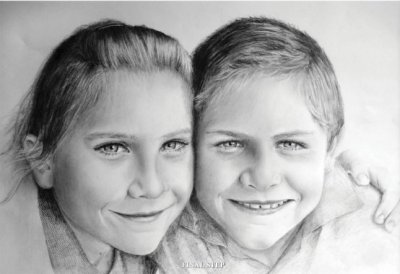
Firstly, I softly rule up a grid and outline the features, then remove grid lines and use a divider to check measurements and a ruler to check angles against the reference photo.