I trace the drawing lightly on to my watercolour paper. Tracing eliminates erasing any pencil lines on the watercolour paper, which can damage the paper’s surface.
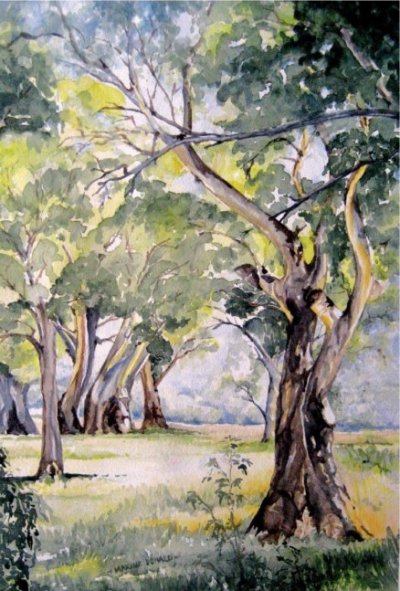

I trace the drawing lightly on to my watercolour paper. Tracing eliminates erasing any pencil lines on the watercolour paper, which can damage the paper’s surface.
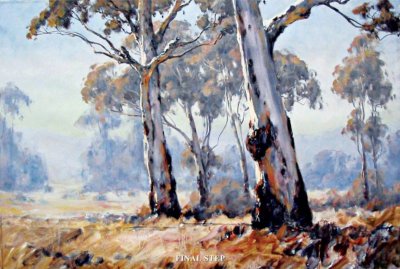
When I begin a painting, I seek to arrange the composition as best I can. Drawing and placement of the elements is important at this stage.

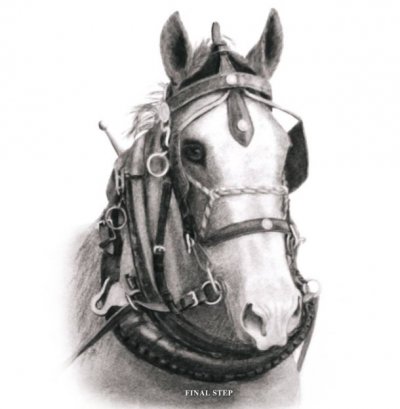
After reviewing the photographic reference, I choose the ones I feel best represent the model and the pose. I put all other reference material away and out of sight to concentrate only on the chosen photos.
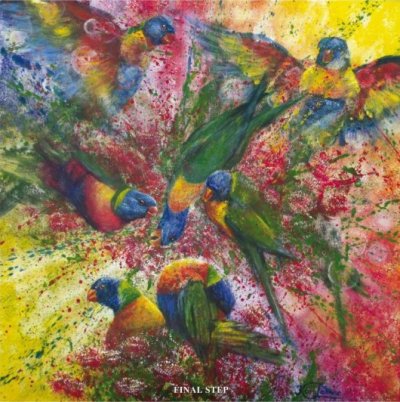
For the rainbow background, I lightly sponged on paint allowing the white of the canvas to show through to suggest a dappled light effect.
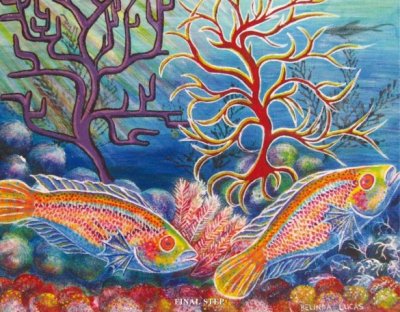
STEP ONE
Take photos of your preferred fish, and then prime your canvas. Sketch your fish.

I draw the basic outline of trees and tree roots. I always draw directly with ink pen on paper. Usually, I prefer Artline pens (0.1 to 0.8), or Rotring pens.

With an old brush – a badly looked after round bristle is my favourite – draw in the main areas of the scene.
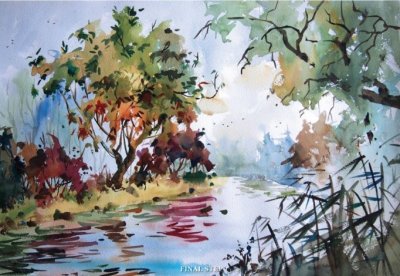
I do a thumbnail sketch of the composition I have in mind. While the thumbnail sketch shown is very loosely done, I have at the back of my mind a very detailed vision of how the finished painting will look like.
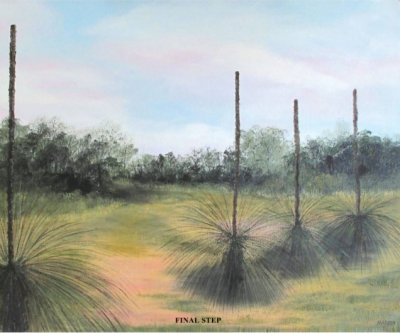
Having given the canvas one coat of Gesso the day before, I painted roughly half the canvas with a light mixture of Titanium White and Cobalt Blue mix, added a little Alizaria Crimson and Titanium mix and finally added whispy white clouds with Titanium White, all painted with the one brush.